Abdominal aortic aneurysms (AAA) are a serious vascular condition that can develop quietly over many years. Because this condition often appears without early symptoms and may run in families, many people ask an important question: are abdominal aortic aneurysms hereditary?
Understanding genetic risk, combined with medical guidance and timely screening, can significantly reduce life-threatening complications.
Let’s see the details discussion-
What Is an Abdominal Aortic Aneurysm?
An abdominal aortic aneurysm occurs when the wall of the abdominal aorta weakens and begins to bulge outward. The aorta is the largest artery in the body, responsible for supplying blood to the abdomen, pelvis, and legs. As the aneurysm grows, the risk of rupture increases.
Key details:
- Develops slowly over time.
- Often detected during routine imaging.
- Can remain symptom-free for years.
- Rupture leads to severe internal bleeding.
Are Abdominal Aortic Aneurysms Hereditary?
Yes, abdominal aortic aneurysms (AAAs) can be hereditary, and family history plays a significant role in determining an individual’s risk. Studies have shown that people who have a first-degree relative, such as a parent, sibling, or child, diagnosed with an abdominal aortic aneurysm are significantly more likely to develop the condition themselves compared to those with no known family history. This increased risk is believed to be linked to inherited genetic traits that influence the strength, structure, and elasticity of the aortic wall.
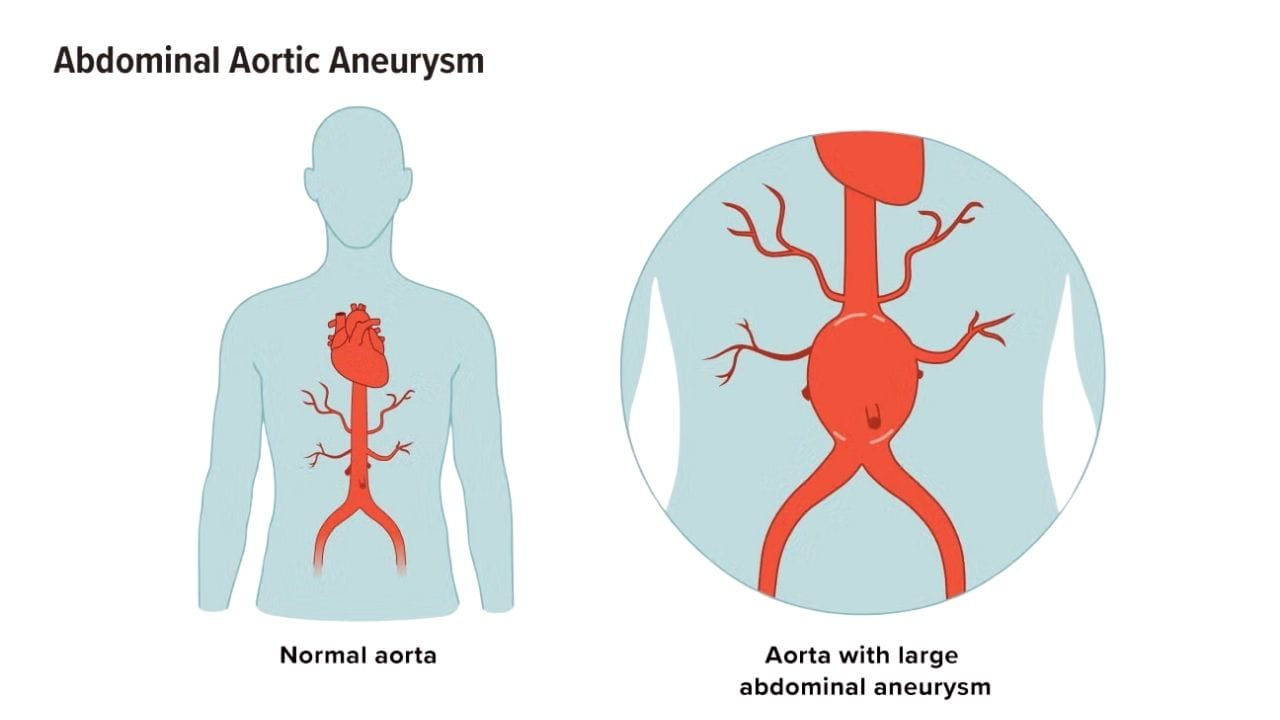
Hereditary factors may cause the aorta to weaken more easily over time, especially when combined with aging, high blood pressure, or smoking. In families with a history of AAA, aneurysms also tend to appear at a younger age, making early awareness especially important.
Key hereditary insights include:
- A 2-4 times higher risk of developing AAA when a close family member is affected.
- Earlier onset in individuals with genetic susceptibility.
- Higher risk among male relatives, particularly fathers and brothers.
- Increased likelihood among siblings, pointing to shared genetic and environmental factors.
Because of this inherited risk, family members of people with AAA should strongly consider earlier and regular screening, even if they feel healthy and have no symptoms. Early detection through imaging tests can help monitor the condition and significantly reduce the risk of serious, life-threatening complications.
How Genetics Weaken the Aorta
Genetic traits influence the strength and elasticity of blood vessels. In hereditary cases, the connective tissue that supports the aorta may be naturally weaker, making it less resistant to long-term blood pressure stress.
Genetic effects may include:
- Reduced collagen and elastin production.
- Increased arterial wall inflammation.
- Faster vessel degeneration.
- Higher susceptibility to aneurysm growth.
Other Risk Factors That Increase AAA Risk
Genetics often works alongside lifestyle and health factors. Even without a family history, certain conditions significantly increase the likelihood of developing an aneurysm.
Major risk factors:
- Smoking (the strongest modifiable factor).
- High blood pressure.
- High cholesterol.
- Male gender.
- Age over 65.
When hereditary and lifestyle risks combine, the danger of aneurysm enlargement rises considerably.
Who Should Get Screened for AAA?
Because AAAs are usually symptom-free, screening is the most effective preventive measure. An abdominal ultrasound is painless, non-invasive, and highly effective for early detection.
Screening is recommended for:
- Men aged 65 and older.
- People with a family history of AAA.
- Current or former smokers.
- Individuals with cardiovascular disease.
Early diagnosis allows doctors to monitor aneurysm size and plan treatment before complications occur.
AAA and Overall Vascular Health
People diagnosed with AAA often experience other vascular issues. While varicose veins and AAAs affect different vessels, both are linked to weakened blood vessel walls and circulation stress.
Patients commonly research what is the best treatment for varicose veins without surgery as part of a broader effort to improve long-term vascular health and avoid invasive procedures when possible.
Symptoms That Require Immediate Attention
Most AAAs cause no symptoms, but when they do, the condition may already be advanced.
Warning signs include:
- Persistent abdominal or lower back pain.
- Pulsating sensation near the navel.
- Sudden, sharp abdominal pain.
- Dizziness or fainting.
A ruptured aneurysm is a medical emergency and requires immediate care.
Treatment Options and Patient Concerns
Treatment depends on the aneurysm size and growth rate. Smaller AAAs are monitored, while larger ones may require surgical repair or minimally invasive intervention.
Because patients often worry about pain and recovery, many ask is varicose vein treatment is painful when comparing different vascular treatment options and comfort levels.
Modern techniques have greatly improved safety, recovery time, and patient comfort.
When to See a Doctor or Vascular Expert
You should consult a vascular specialist if you have a family history of AAA, cardiovascular disease, or risk factors such as smoking and high blood pressure. Early expert evaluation can prevent serious complications and guide appropriate screening.
Seek expert advice if you:
- Have a close relative with AAA.
- Are over 55 with vascular risk factors.
- Experience unexplained abdominal or back pain.
- Have been diagnosed with an aneurysm or artery disease.
Expert Suggestion
Consulting an experienced vascular specialist like Dr. Rema Malik can help you understand your individual risk, choose the right screening schedule, and explore the safest treatment or monitoring options based on your condition.
Can Hereditary AAA Be Prevented?
While genetics cannot be changed, proactive management can significantly reduce the risk of aneurysm growth and rupture.
Prevention strategies include:
- Quitting smoking
- Managing blood pressure and cholesterol
- Maintaining a healthy weight
- Regular medical follow-ups and imaging
Frequently Asked Questions (FAQ)
Is an abdominal aortic aneurysm always inherited?
No. Genetics increases risk, but many AAAs develop due to age, smoking, and cardiovascular disease.
How early should screening start with family history?
People with a strong family history may benefit from screening between the ages of 55-60.
Can women inherit AAA?
Yes. Although less common, women can inherit AAA and should not ignore family history.
Can lifestyle changes stop AAA growth?
Lifestyle changes can slow growth, but do not replace medical monitoring.
References
- Society for Vascular Surgery -Abdominal Aortic Aneurysm Guidelines
- National Heart, Lung, and Blood Institute – Aortic Aneurysm Overview
- Centers for Disease Control and Prevention – AAA Risk Factors
- Mayo Clinic – Abdominal Aortic Aneurysm Causes and Screening
- British Heart Foundation -Genetic Risk in Vascular Disease